Rethinking solar energy
The global transition toward sustainable energy depends on our ability to harness sunlight more efficiently, affordably, and at scale. While conventional silicon-based solar cells dominate today’s market, emerging thin-film technologies offer exciting opportunities for lighter, flexible, and more versatile energy solutions. A newly funded research project aims to push this frontier further by developing a novel class of multidimensional thin-film solar cells built from nanomaterials.
At the heart of the project is a simple but powerful idea: combining different types of extremely small materials into one solar cell. These materials come with different “shapes” at the nanoscale – some are like tiny dots (0D quantum dots), some form thin wire-like crystals (quasi-1D antimony chalcogenides), and others are ultra-thin sheets (2D transition metal dichalcogenides).
Each type plays a specific role. Quantum dots can help guide how the active material grows, the wire-like active material absorbs sunlight and help charges move efficiently through the device, and the sheet-like layers help control how the materials connect to each other. By carefully combining them, the project aims to make all parts work together more effectively, leading to better performance than any single material could achieve on its own.
The power of interfaces
A central focus of the research is understanding and controlling interfaces – the tiny boundaries where different materials meet. These interfaces often determine how efficiently charges can move through a solar cell and are a major source of energy loss through recombination. The project will investigate how multidimensional material combinations influence crystal growth, interface formation, and electronic behavior. By tailoring these interfaces at the nanoscale, the research aims to suppress recombination losses and improve charge extraction.
To achieve this, the project combines experimental and theoretical approaches. Solution-based synthesis techniques will be used to fabricate the materials, followed by solar cell assembly and advanced characterization of their structural and electronic properties. In parallel, targeted electronic-structure modeling will provide insights into how atomic-scale interactions influence macroscopic device performance. This integrated approach will establish clear links between material design, interface properties, and solar cell efficiency.
Abundant energy
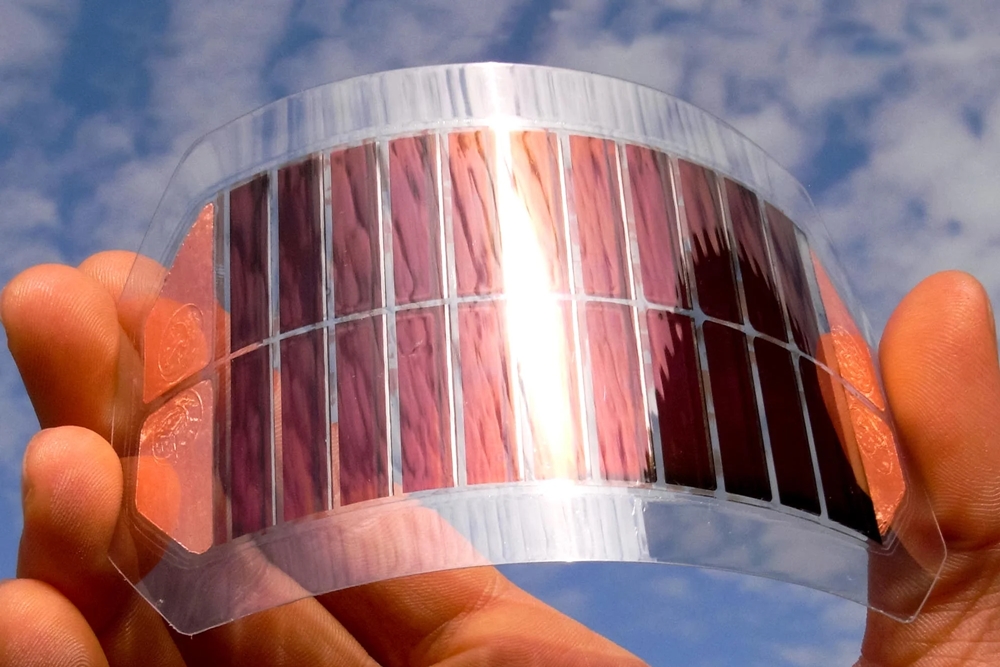
The societal relevance of this research is significant. Sunlight is an abundant and renewable energy source, yet capturing it efficiently and sustainably remains a challenge. Thin-film solar cells have the potential to transform how and where solar energy is used. Their lightweight and flexible nature makes them suitable for integration into buildings, windows, portable electronics, and even indoor environments where traditional solar panels are impractical. By focusing on earth-abundant materials, the project also addresses concerns about resource availability and long-term sustainability.
Looking ahead, the field of thin-film photovoltaics is evolving beyond traditional applications. Future technologies are expected to seamlessly integrate into everyday environments, powering sensors, wearable devices, and smart infrastructure. Achieving this vision requires not only high efficiency but also stability, scalability, and precise control over nanomaterials. This project contributes to that direction by developing fundamental design principles for multidimensional solar cells, enabling more robust and adaptable photovoltaic systems.
Building knowledge and capacity
The outcomes of the project are expected to be both scientific and societal. On the scientific side, it will generate new knowledge about how nanoscale interfaces govern crystal growth, charge transport, and recombination processes. These insights will inform the design of next-generation solar cells with improved efficiency and stability. On the societal side, the research supports the broader goal of sustainable energy by advancing technologies that can be produced at lower cost and deployed in new contexts.
In addition, the project will strengthen research capacity and collaboration. It will support the training of early-career researchers in advanced materials synthesis, device fabrication, and characterization techniques, while fostering international partnerships. This investment in people and knowledge will help build a strong foundation for future innovation in sustainable energy materials.
Toward a solar-powered world
Ultimately, this research represents a step toward a future where solar energy is not confined to rooftops or solar farms, but is seamlessly embedded into the fabric of everyday life. By rethinking how materials are combined and how interfaces are engineered, multidimensional thin-film solar cells could play a key role in powering a more sustainable world.