Microchip can save millions of litres of milk from going down the drain
Every day, massive amounts of milk are poured down the drains in connection with the cleaning of production pipes at dairies worldwide. A newly developed photonic microchip will reduce this huge waste of milk.
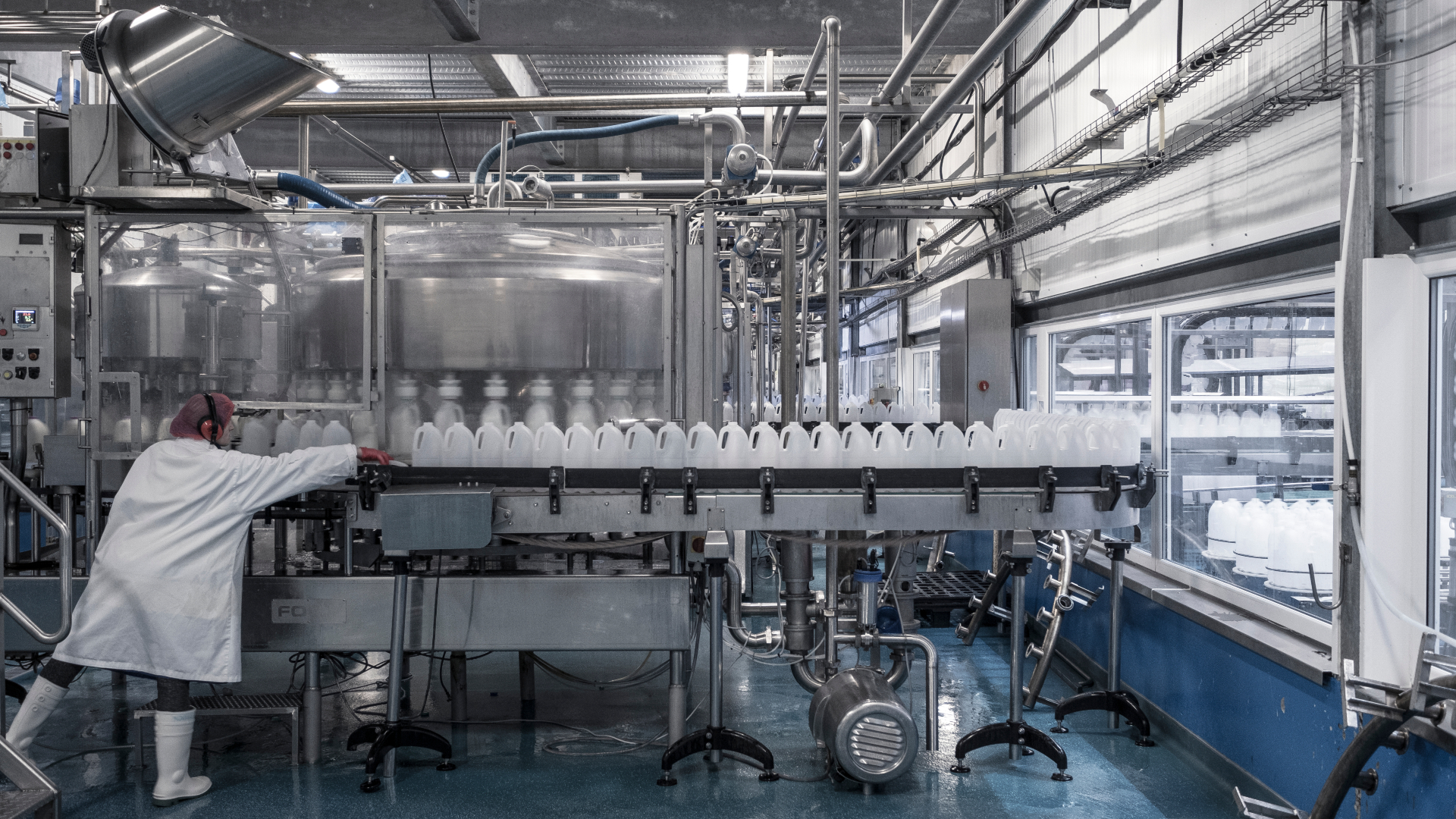
A study from the University of Edinburgh shows that one in six litres of milk produced around the world goes to waste. Photo: Foss Analytical
Milk is one of the foods where a significant percentage goes to waste. A study from the University of Edinburgh shows that one in six litres of milk produced around the world goes to waste. The root cause of this waste can be found early on in the production process. Each day, every dairy in the world pours an average of around 10,000 litres of milk down the drain.
This waste is something that happens every day. Not because the milk has gone off—on the contrary, it is completely fresh. It happens when milk is used to flush the pipes that transport the milk through the production plant and into the cartons. In this way, the dairies ensure that any excess cleaning fluid used to clean the pipes between production runs is completely flushed out with the milk and into the drains before a new production can start.
In the Nexus consortium, researchers from DTU and three tech companies have joined forces to rethink how milk production—and potentially other food production—is controlled. Together, they have developed an ultra-compact optical spectrometer (see fact box) in the form of a microchip that makes it possible to see the amount of liquid, fat, and proteins in the pipes. It thus makes it possible to identify whether milk residues from a previous production run or cleaning products are present.
Facts
Optical spectrometer
An optical spectrometer is an instrument that measures the intensity of light relative to wavelength (‘colours’). At a dairy, light is shone through the milk, and depending on the chemical compounds present in the milk, some wavelengths will be absorbed, while others will be scattered or perhaps pass through unhindered. The chemical composition of the liquid therefore leaves a precise fingerprint on the light, so that a spectrometer can provide a precise measurement of the content of protein, fat and water.
Reason to cry over spilled milk
Having old milk residues from a previous production run sitting in the pipes is no good. Under the dairies’ strict cleaning rules, all the pipes are thoroughly rinsed with cleaning fluid and water before a new production starts. And this is where the problem arises.
The reason is that it is not possible to see whether there are still residues in the pipes after cleaning, which of course must not contaminate the new production. To avoid any doubt, large amounts of ready-to-drink milk are poured through the pipes and into the drains before the new production can begin.
The procedure is not only time-consuming, but also costly and climate-unfriendly. When it comes to the climate, there is actually every reason to cry over spilled milk: Methane from cattle production is one of the biggest climate culprits, and even though beef is associated with significantly higher emissions than milk, figures from Our World in Data show that one litre of milk accounts for an average of 3.15 kg of CO2 equivalents globally.
CO2 equivalents are a conversion of greenhouse gases to the same ‘currency’ so that they can be compared. This is necessary because there are differences in how much the greenhouse gases from different products contribute to global warming. For comparison, figures from Our World in Data show that the CO2 equivalents for almond and soy milk are 0.70 kg and 0.98 kg per litre, respectively.
The 3.15 kg of CO2 equivalents for cow’s milk can be multiplied by 10,000 every single day for every dairy in the world, which adds up to massive emissions of greenhouse gases from which we get nothing but waste.
“We want to create a product that makes economic sense for us and the dairies, and which is also good for our planet,” says Søren Stobbe, professor at DTU Electro and head of the Nexus project.
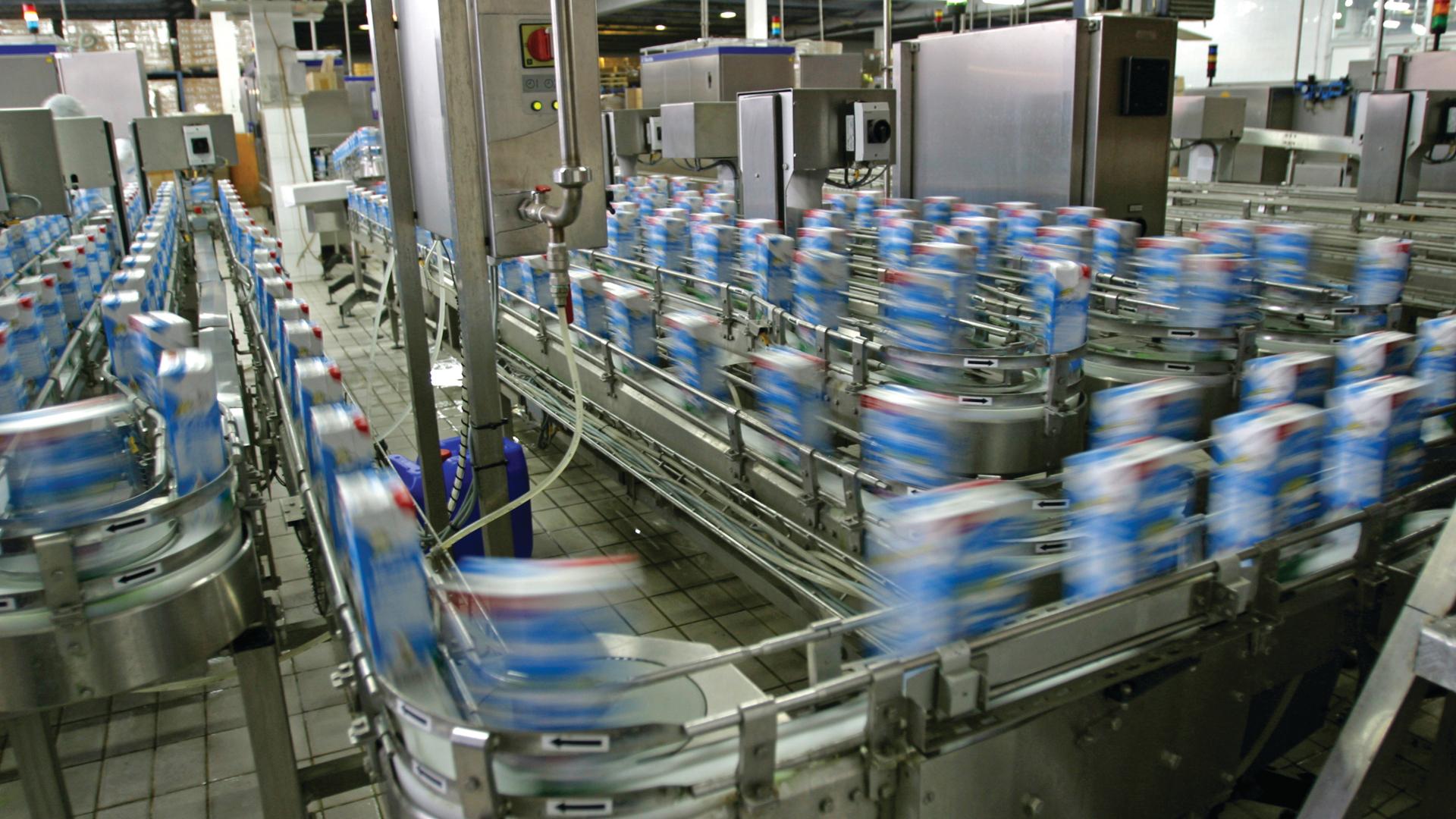
On average 3.15 kg of CO2 are emitted when producing one liter of milk. Foto: Foss Analytical
Replacing expensive alternative
If you look into a dairy, you will typically find a facility full of pipes and sensors. In here, the dairymen can very precisely control the flow rate of the milk as well as the temperature and pressure. But when it comes to identifying what exactly is flowing through the pipes, it is a much more difficult task for the dairymen. This is because the existing spectrometers are both very large and—in spite of the high levels of milk waste—far too expensive to be competitive.
“The spectrometers used by the dairies today cost about EUR 100,000 each. So, you can’t just establish 100 measuring points, as it’s simply too expensive. With our solution, the idea is to build small, compact and lower-priced spectrometers, which means that you can incorporate many more measuring points and thus know for certain when the pipes are ready for the next production run,” says Søren Stobbe.
The new spectrometer is based on advanced nanotechnology, which provides unique possibilities for reducing the size and cost of the technology. However, a number of factors need considering.
“Among other things, we must ensure that our chips do not contain rare materials and that they can be produced under proper conditions. In addition, our technology must be able to run around the clock without using a lot of energy. We believe that this will be possible with our solution,” says Søren Stobbe.
Improving food safety
Right now, the technology is being tested, but the team holds high expectations, and they also expect the technology to be useful in other areas that are not related to food waste.
“I’m very optimistic about the project. There’s a lot of work to be done on the back of the project in terms of actually commercializing our spectrometer. Right now, we have demonstrated our spectrometer concept, and it works reasonably well. And fortunately it looks as though we will be able to overcome the challenges that remain,” says Søren Stobbe.
The team behind the project hopes that the optical spectrometer will become a useful tool in countries with less focus on food safety and food control. In the worst case, this has resulted in the loss of human lives. Our hope is therefore that some of these countries will start using this significantly cheaper microchip solution, so that food production can be monitored to identify ingredients that have no place in the production.
In addition to DTU, the Nexus consortium consists of Foss Analytical A/S, Elionix Inc., and Beamfox Technologies ApS.
Facts
Food waste
The Danish Veterinary and Food Administration defines food waste as all types of food—both the edible and non-edible parts, for example the fleshy part of a banana as well as the banana peel. Food loss, on the other hand, only concerns the edible part of food waste.
UN Sustainable Development Goal no. 12.3 aims to halve the global per capita amount of food waste (including food loss) at the retail and consumer levels by 2030.
Research area
Sustainable food
26 % of the world's total CO2 emissions come from food production. Livestock in particular account for a large share.
To reduce the climate impact of food production, we need a green transition. This can be achieved through the use of technology, digitalization and the development of new foods.