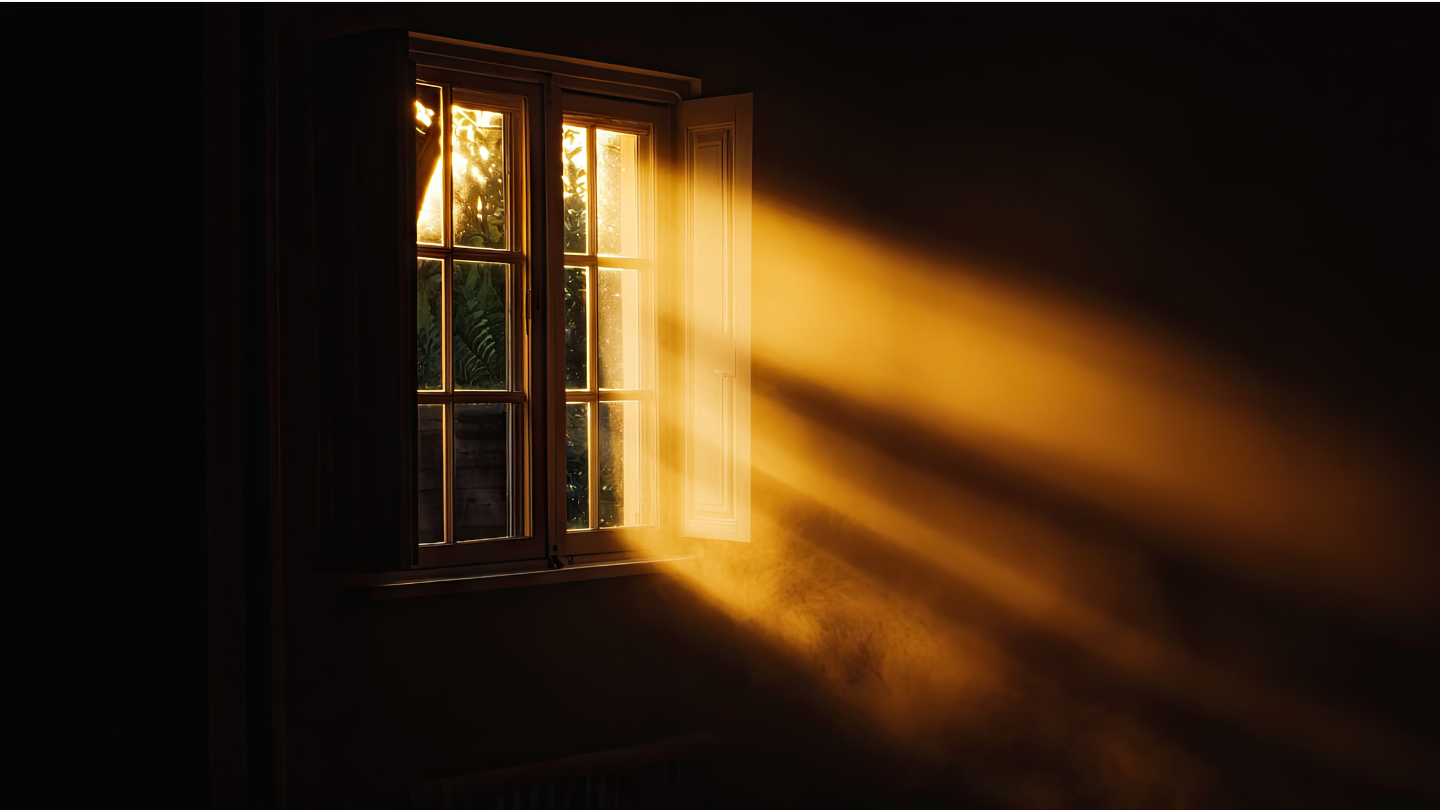
Light therapy: A helping hand for your sleep pattern and seasonal depression
The dark months are upon us, and so is the risk of being hit by winter depression, fatigue and a bad mood. But maybe light therapy can give us the energy we need?
Thursday 29 January 2026
"It is better to light a candle than to curse the darkness,” goes an old Chinese proverb.
But perhaps in a new interpretation, a candle could be replaced with a light therapy lamp. A form of light therapy that could possibly feed us some of the sunlight we so crave during the dark winter months.
Maybe you know the feeling.
For months you’ve been leaving for work in the dark, and returning home from work in the dark. Your mood and energy levels fluctuate, fatigue shows up when it shouldn't, and you feel like you're in some kind of long-distance relationship with the sun that you may not see until spring.
Right now we have about 9 hours of daylight before the sun sets below the horizon. So even though we’ve made it through the darkness of December with only 7 hours of daylight, we’re still at just half of the 18 hours we’ll have by the summer solstice at the end of June.
“When we get too little light in the winter, our circadian rhythm can be completely thrown off,” says Professor Paul Michael Petersen. He is researching what light – and the lack of light – means for us humans.
"In reality, we humans were originally born around the equator and have only been here in the North for maybe 12,000 years. We simply don't get enough light up here in the north during winter," he says.
Can a lamp that simulates the sun's rays really help with winter depression and the "dysfunction" many of us experience in winter?
Depression lamp
“I can just try pressing the button here.”
Paul Michael Petersen himself has a light therapy lamp in front of him in his office.
A specially designed lamp that – in the professor's case – resembles a large, circular light shade with a pair of buttons at the bottom. Made by Danish model maker and designer Morten Lyhne.
“I use it every day. It really affects me, and I can feel it lifting my mood,” he says.
Although seasonal depression is not an official medical term, most people are affected by the shortening of the days, with symptoms such as lack of energy, fatigue, and low mood, which for some people can develop into depression.
According to Paul Michael Petersen, a light therapy lamp has precisely the effect of combating seasonal depression. The circadian rhythm is stabilized, sleep is improved, and as a result, the body gets more energy.
“It's equivalent to sitting outside for half an hour on a really nice summer day,” agrees Klaus Martiny, who is a professor and senior physician at the Psychiatric Center Copenhagen and specializes in the effect of light therapy against winter depression.
“There’s no hocus pocus about it. Light therapy lamps provide something similar to daylight, and it has been shown that it can actually alleviate some of the symptoms of seasonal depression that many people experience in the winter.”
According to Sundhed.dk between 5 and 10 percent of the population suffers from seasonal depression to a greater or lesser extent.
Eat breakfast with the lamp
But how should you use such a light therapy lamp?
According to Klaus Martiny, you should look for a light therapy lamp that provides 10,000 lux, the unit of measurement for illuminance, when it is at a distance of between 30 and 40 cm from the face.
“You should sit in front of the lamp for half an hour to an hour. This could be at the dining table while you eat breakfast, or in bed when you wake up,” he explains.
“It should be next to you, and preferably slightly raised so that you don't look directly into it. It's a very bright light, and it can be uncomfortable to have to look directly into something so bright.”
According to Paul Michael Petersen, who himself uses a light therapy lamp during his workday, it takes time before you feel the effect of the light therapy.
“We're not just talking about one day. Preferably 20 minutes a day over a few months, as these are slow processes in the body, and it takes some time for serotonin levels to reach the right level.”
Serotonin is precisely the key word. And Paul Michael Petersen spells out an otherwise complex science.
Because when we humans get the right amount of light in our eyes over several months, serotonin levels in the brain increase, which helps improve mood. It is also important that the light therapy is in the morning or early morning, they say.
It stimulates the stress hormone cortisol, which makes us wake up and feel refreshed. The opposite of the “darkness hormone” melatonin, which tells us it’s time to go to bed.
But isn't there still a difference between the light we get from the sun and the light we get from a lamp?
“If you can get more daylight, even in these dark winter months, it would be preferable to getting light from a lamp. It is best to get daylight before going to work or to sit closer to a window with lots of daylight at work,” says Paul Michael Petersen.
“But these lamps are typically designed to mimic the daylight outside and provide the light we lack in the winter. They can therefore help support a good circadian rhythm and improve our mood.”
We recommend that you contact your doctor before starting light therapy if you suspect that you are suffering from depression or another psychiatric illness.
Facts
What is light therapy?
A well-established treatment for both depression and seasonal depression. Can also be tried for difficult-to-treat depression.
You sit in front of a specially designed lamp that provides high-intensity light. You often have to sit in front of the lamp at a distance of between 30 and 50 cm for half an hour to an hour, depending on the strength of the lamp.
It lifts the mood, stabilizes the circadian rhythm and gives more energy, so that seasonal depression or other forms of depression are reduced. Light therapy can therefore also be used to enhance the effect of antidepressant medication.
If you suspect that you are suffering from depression or another psychiatric illness, it is advisable to contact your doctor before starting treatment.