very year, large quantities of expensive and safety-critical composite components are discarded because existing inspection methods can’t detect all defects. In the aerospace industry, even small hidden flaws can have major consequences for safety, delivery time, and cost.
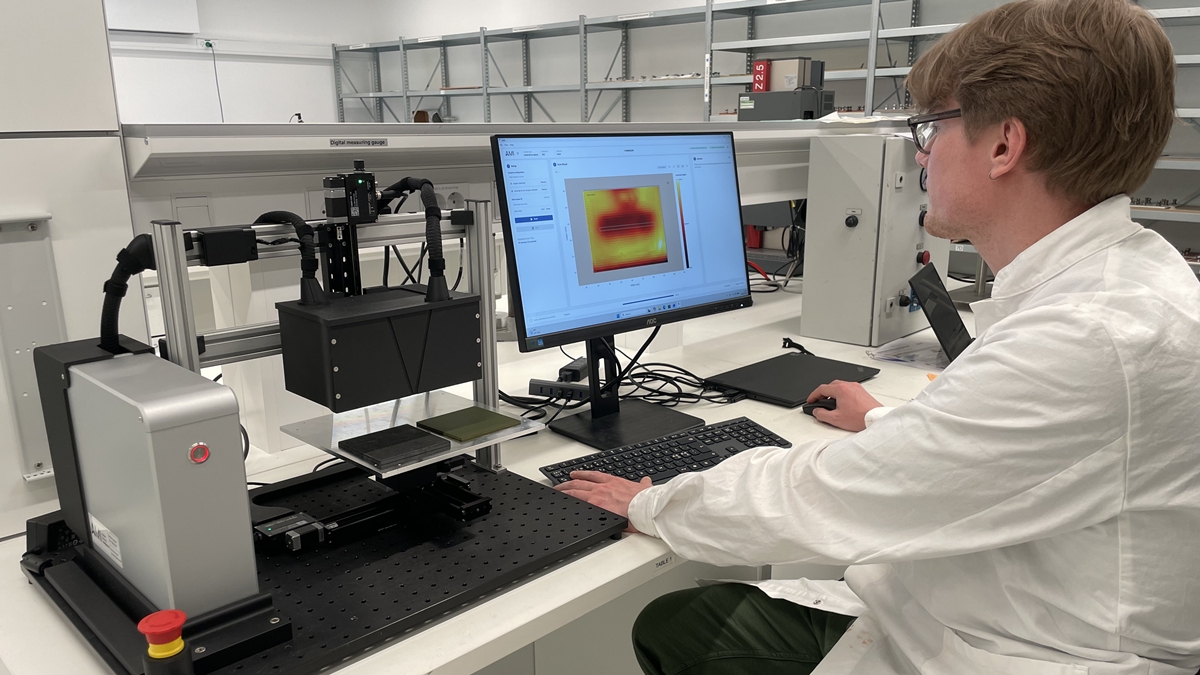
Through the THz-NEXUS project, DTU Electro, AMI – Applied Material Intelligence, and Space Composite Structures Denmark will develop a new, practical solution that uses harmless terahertz radiation to reveal defects both during and after the production of composite materials – without halting production.
Terahertz technology to reduce waste and defects
The project will make it easier and faster to inspect composite components earlier in the process and with greater accuracy. This will reduce waste, defects, and material consumption, while also shortening the time from production to approval. It will strengthen Denmark’s and Europe’s position in a growing market with increasing demand for defect-free production, particularly in aerospace and wind energy industries.
By integrating inspection directly into production, companies will experience fewer defects, less waste, and more stable deliveries, boosting competitiveness while reducing environmental impact.
“With THz-NEXUS, we will integrate decades of experience in data processing from the laboratory into a state-of-the-art industrial terahertz-based measurement system from AMI. The goal is a solution ready for use in the composite industry, capable of detecting small hidden defects while operating in a busy production environment where quality, speed, and documentation must align,” says Peter Uhd Jepsen, Professor at DTU Electro and project leader.
Strong partnership to bring the technology into industry
An investment of DKK 9.7 million from Innovation Fund Denmark enables the project to bring together all the necessary expertise: DTU Electro contributes research in terahertz signal processing and machine learning, AMI builds and adapts its latest generation of terahertz measurement systems, and Space Composite Structures Denmark provides a real production environment. Together, the partners will build, test, and validate a system that goes far beyond a traditional prototype.
The project builds on knowledge and results achieved through international collaborations, including with the European Space Agency (ESA). This means the technology is already at an advanced stage of development, being tested not only in laboratories but also through blind tests and ultimately applied in real industrial settings with actual operators and components. This level of maturity is essential for delivering large-scale value to both industry and society.
The project is developed through close collaboration between DTU Electro, which leads the project and develops measurement, data analysis, and validation methods; AMI – Applied Material Intelligence, which industrializes the measurement system and ensures robustness and production readiness; and Space Composite Structures Denmark, which handles practical implementation in daily production and ensures alignment with real-world needs.
In addition, a strong network of partners and users, including Airbus, Thales, and ESA, will be involved to ensure the project continuously aligns with market demands. The goal is to deploy the solution in Denmark first and then scale it across Europe.